Bedding · A practical guide
Cotton, Wool, or Down: Finding the Right Bed Pad for Your Sleep Needs
The most considered bed is not always the one with the most layers. It is the one whose layers make sense together: a mattress that supports you, a pad that serves a clear purpose, and bedding that feels comfortable through the night. Cotton, wool, and down each bring a different character to the bed, from crisp, easy-care simplicity to softly cushioned warmth.
Published October 18, 2026
First, decide what you want a bed pad to do
“Bed pad” can describe several kinds of bedding, and product names are not always used consistently. A mattress pad usually adds a modest layer of softness or loft, sometimes with a protective function. A mattress protector is designed primarily to shield the mattress from spills, perspiration, dust, or everyday wear. A topper is generally thicker and more transformative: it can noticeably change the surface feel of a mattress.
These jobs can overlap, but they are not interchangeable. A quilted cotton pad may add a little cushioning, yet it should not be assumed to offer waterproof protection. A lofty down pad can make a firm bed feel softer without correcting a mattress that is sagging. A wool layer may feel comfortable across changing seasons, but it is not automatically a washable, waterproof barrier. Start with the need, then choose the material.
Ask yourself what you notice when you lie down. Is the mattress slightly too firm? Does the surface feel clammy or overly warm? Do you want a washable layer between the sleeper and the mattress? Are you seeking a plush, hotel-like softness, or would you rather keep the bed streamlined? A clear answer prevents the common mistake of buying a thick pad when what you need is protection, or choosing a protector when you hoped for meaningful cushioning.
Cotton: breathable, familiar, and relatively simple
Cotton is a natural fibre valued for its familiar hand, everyday practicality, and range of constructions. In a bed pad, it may appear as a woven cover, a quilted layer, or the filling itself. Those details matter: a cotton shell over another fill will feel different from a pad filled with cotton batting. Look at both the outer fabric and the inner material rather than relying on a front-label claim.
A cotton mattress pad is often a good choice for someone who wants a restrained layer of softness without a dramatic change in the mattress. A quilted design can smooth the surface and add a little cushioning while allowing the underlying mattress to remain the main source of support. Cotton can also suit sleepers who prefer a less lofty, less enveloping feel than down.
Its appeal is especially clear in a well-layered bed. A breathable cotton cover can feel crisp and comfortable under sheets, while a washable pad gives the mattress a practical buffer against ordinary use. If spill protection is the priority, however, check that the product is specifically described as waterproof and review the construction. A cotton surface alone does not make a pad liquid-resistant.
Care varies. Some cotton pads can be machine washed; others may shrink, lose shape, or require more delicate treatment. Check the stated wash temperature, drying method, and any instructions about bleach or fabric softener. Deep, bulky pads may not fit comfortably in every household machine, even when their labels permit laundering. For Canadian homes where winter drying can take longer, the recommended dryer setting and drying time are worth considering before purchase.
In short, cotton is the quiet choice: adaptable, familiar, and easy to integrate into many bedding combinations. It is most compelling when you want modest cushioning, a breathable-feeling surface, and care instructions that suit your routine.
Wool: a considered layer for changing temperatures
Wool has a distinct place in bedding because it can add loft while helping manage the feel of warmth and moisture. The effect depends on the amount of fill, the weave of the cover, the room climate, and the other layers on the bed. Wool is not a guarantee against overheating, nor does every wool pad feel the same. A thin quilted pad and a deep wool-filled topper are different propositions in both comfort and care.
For sleepers who move between cool nights and warmer spells, wool may be appealing because it brings a cushioned, substantial feel without the same airy puffiness associated with down. In a Canadian home, indoor temperatures can vary considerably between seasons and between heated and unheated rooms. Rather than choosing solely by the outdoor forecast, consider the bedroom itself: heating habits, ventilation, bedding weight, and whether you tend to sleep warm or cool.
Construction is central. Check the fill composition, its weight or stated thickness, the casing fabric, and how the pad stays in place. Corner straps can help prevent shifting, while a fitted design may offer a more enclosed fit. Confirm the mattress depth against the product’s pocket or skirt measurements, particularly if the bed has a pillow top or already carries a thick protector.
Wool care is not uniform. Some wool products are spot-clean or dry-clean only; others are specially designed to be machine washable. Never infer washability from the fibre alone. If you want a wool pad that can be laundered at home, confirm the care label and use the exact temperature and drying method specified. Washing outside those instructions can damage the fill or change the fit.
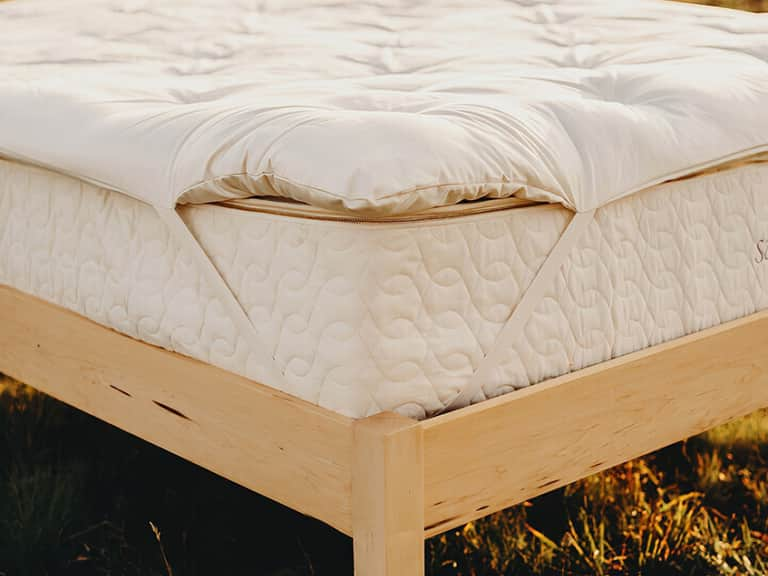
For a specific example of this category, the Washable Wool Filled Mattress Topper combines a wool-and-plant-based batting fill with an organic cotton sateen shell and corner straps. Its listed care instructions specify a cold, gentle machine wash and low tumble drying. Those details make it a useful illustration of why wool products should be compared by construction and care, not by material name alone.
Wool may suit someone looking for a softly cushioned layer and a material with a more substantial, less cloudlike hand than down. It is less suitable for a household that wants a simple hot wash unless the particular product is explicitly designed for it.
Down: airy loft and a plush, enveloping feel
Down is prized for loft: a light, soft filling that can make a bed feel more generously cushioned. A down mattress pad may add a sumptuous layer between the sleeper and a firmer mattress, creating a sense of softness without necessarily adding the dense weight of some other fills. Its characteristic feel is airy and yielding rather than crisp or springy.
That softness is not the same as support. Down can soften the first impression of a mattress, but it will not replace a supportive foundation or restore a worn-out sleep surface. If the mattress has a visible dip or leaves you uncomfortable because it no longer supports you evenly, adding a plush pad may disguise the problem temporarily rather than solve it.
Pay attention to the construction. The fill amount, compartment design, shell fabric, and depth all influence how a down pad feels and whether the filling stays evenly distributed. A sewn-through design can create visible channels; box construction may help contain loft in separate sections. Neither detail alone determines quality, so consider the product’s full specifications and how much cushioning you want.
Down usually asks for more attention than a straightforward cotton pad. Some products require professional cleaning, while others can be washed at home under carefully specified conditions. Drying thoroughly is essential to avoid dampness and clumping. Check the care label before buying, and consider whether you have access to an appropriately sized washer and dryer. For a household with limited laundry space, a beautiful, lofty pad can become less appealing if its upkeep is inconvenient.
Down is worth considering if softness and loft are the priorities and you are comfortable following its care requirements. It may be less satisfying for people who prefer a flatter surface, are sensitive to a warm or enveloping bed, or want the simplest possible laundering routine.
A clear comparison: feel, warmth, and care
Material names offer a useful starting point, but the finished product is shaped by fill, fabric, thickness, and construction. Use this broad comparison as a guide, then check the specifications of the individual pad.
| Material | Typical feel | Often suits | Care to check |
|---|---|---|---|
| Cotton | Soft to crisp; usually modest in loft | Those seeking everyday comfort and a less lofty profile | Wash temperature, shrinkage, drying method, and whether the pad is protective or merely absorbent |
| Wool | Cushioned and substantial, with a feel shaped by fill weight and quilting | Those interested in a natural-fibre layer and a bed that can feel comfortable across seasons | Whether it is machine washable, the permitted cycle, and drying instructions |
| Down | Light, lofty, and plush | Those who want a softer, more enveloping surface | Cleaning method, complete drying needs, and how the fill is contained |
These are tendencies, not promises. A tightly quilted wool pad may feel flatter than a generously filled cotton design; a down product with a firm, closely woven casing may feel less cloudlike than expected. Product specifications are more informative than a single fibre label.
Fit is part of comfort
A pad that slips, bunches, or pulls at the corners can interrupt an otherwise carefully made bed. Before ordering, measure the mattress length, width, and depth. Include any existing topper or pillow-top construction when estimating the height that a fitted skirt needs to accommodate. Product descriptions often list a maximum mattress depth or pocket measurement; compare it with the actual bed rather than assuming a standard fit.
Consider how the pad attaches. Elastic skirts can offer full coverage around the mattress, while corner straps may be easier to position on some designs. Straps should sit securely without stretching excessively. If you are layering a waterproof protector, pad, and fitted sheet, check that the sheet still fits comfortably over the total height.
Layer order matters, too. A protector generally belongs close to the mattress so it can perform its protective role. A comfort-focused pad or topper can sit above it, with the fitted sheet over the sleep surface. Always follow the care and use instructions for each item. A pad should not be tucked or secured in a way that compromises the fit of a child’s sleep surface or other specially designed bedding.
Choosing for the Canadian seasons
Canada’s range of climates makes bedroom comfort a local, not merely seasonal, question. A well-heated apartment in a cold region can feel dry and warm through winter; a coastal home may experience dampness and milder temperatures; a northern bedroom may stay cool for longer. The right bed pad depends less on a province’s general reputation than on the room where you sleep.
For winter, a lofty pad may sound appealing, but consider the whole bed. Flannel sheets, a heavy duvet, and a warm room can add up quickly. If you wake overheated, changing one layer may be more effective than replacing the mattress pad. In summer, breathable-feeling fabrics and a lighter cover can make the bed feel less insulated, while a thick pad may retain more warmth simply because of its loft and construction.
Think practically about laundering as well. During long stretches of wet or cold weather, a pad that takes a long time to dry can be inconvenient. If washable bedding is important, look for specific machine-care instructions and realistic drying guidance. A removable cover or a compatible mattress protector may help make routine care easier, but each item has its own maintenance requirements.
For renters and homeowners alike, room conditions can be adjusted without changing the entire bed: use lighter or heavier sheets, improve airflow when weather permits, and choose a duvet suited to the season. A pad is one part of the sleep environment, not a standalone temperature-control system.
A measured approach to allergies and materials
People often choose natural fibres because they want to understand what touches their skin or because they prefer a particular material’s feel. Still, labels such as “natural,” “organic,” or “hypoallergenic” do not tell the whole story. Sensitivity differs from person to person, and a fibre’s source does not guarantee that every sleeper will find it comfortable.
Read the full material description, including the cover, fill, dyes or finishes where disclosed, and cleaning instructions. A removable, washable cover can be useful for routine hygiene, though it does not substitute for an appropriate mattress protector. If you have a diagnosed allergy or persistent symptoms, seek advice from a qualified health professional rather than relying on a bedding claim to address a medical concern.
How to make the decision
Use a short checklist before choosing the best mattress pad for your needs:
- Name the main job. Decide whether you want softness, loft, mattress protection, or a combination.
- Choose the feel. Cotton tends toward a familiar, less lofty surface; wool can provide cushioned substance; down is associated with light, plush loft.
- Check the construction. Compare fill and shell materials, quilting, thickness, and attachment method.
- Measure the mattress. Confirm the pad’s dimensions and maximum depth, including other layers already on the bed.
- Be honest about care. Select a product whose washing and drying instructions fit your household routine.
- Consider the bedroom, not just the climate. Room temperature, heating, ventilation, sheets, and duvet all influence how warm the bed feels.
If you are uncertain, a simpler, thinner layer can be a more flexible starting point than a dramatic, lofty one. It is easier to add warmth with a duvet or change the sheet than to make an overly plush sleep surface feel crisp again. Where possible, review the return policy and warranty before buying, and keep the product’s care label accessible.
The finishing layer, chosen with intention
A bed pad is a small decision with an outsized effect on how a bedroom feels. Cotton offers practical familiarity and restrained softness. Wool brings a more substantial natural-fibre layer whose care requirements vary by design. Down delivers airy loft for sleepers drawn to a plush, cushioned surface. None is universally best; each becomes the right choice when its feel, construction, and maintenance match the person and the bed.
Keep the distinction between comfort and protection in view. A pad may soften the surface, a topper may change it more substantially, and a protector may help guard the mattress. When each layer has a clear purpose, the bed feels less like a collection of products and more like a considered, comfortable whole.
Frequently asked questions
Is a bed pad the same as a mattress protector?
Not necessarily. A pad often adds cushioning, while a protector is intended to guard the mattress. Some products combine functions, but verify waterproofing and other protective claims in the product specifications.
Which material is best for a hot sleeper?
There is no universal answer: fill weight, fabric, bedroom temperature, and other bedding layers all affect warmth. Compare the full construction and consider reducing heavy layers if you regularly wake too warm.
Can a mattress pad fix an uncomfortable mattress?
A pad can change the surface feel, especially when a mattress is only slightly firmer than you prefer. It cannot reliably correct sagging, a damaged support system, or a mattress that no longer suits your support needs.
Can wool or down pads be machine washed?
Some can, but many require special care. Check the exact product label and follow its washing and drying directions; never assume that a fibre category determines how a finished pad should be cleaned.