Bedding · Seasonal care
Caring for a Wool Topper Through Canada's Changing Seasons
A wool sleep layer brings a quiet, natural ease to the bed: soft cushioning, breathable warmth, and a comfortable balance across the year. In Canada, where indoor air can shift from dry winter heat to humid summer weather, thoughtful seasonal care helps keep a wool topper fresh, resilient, and ready for nightly use.
Wool bedding is often chosen for its distinctive combination of insulation and moisture management. Wool fibres can absorb and release water vapour, helping moderate the feel of the sleep surface as conditions change. Yet wool is not carefree: its structure benefits from gentle handling, and a topper or pad may need different attention from cotton bedding that can simply be put into a washing machine. Regular airing, sensible protection, careful spot cleaning, and storage that allows the fibres to breathe are the foundations of good wool topper care.
The most important rule is also the simplest: follow the care label supplied with your specific topper. Wool layers vary in construction. Some are quilted into cotton covers, some are secured with tufting, and others combine wool with latex or additional fibres. Instructions suitable for one design may be inappropriate for another. Before cleaning, check whether the cover is removable, whether the topper is washable, and which methods the maker recommends. When in doubt, choose the least aggressive approach and ask the manufacturer for guidance.
Why wool responds to the seasons
A Canadian bedroom is not a fixed environment. In winter, windows may stay closed and heating systems can make indoor air exceptionally dry. In spring and autumn, changing temperatures invite more ventilation, while summer can bring warm nights, open windows, and higher humidity in some regions. These shifts influence how bedding feels and how quickly moisture evaporates from the sleep surface.
Wool’s natural crimp creates small pockets of air that contribute to insulation, while the fibre can take up moisture vapour and release it as surrounding conditions allow. This does not make a wool topper waterproof, nor does it mean it should be left damp. Perspiration, spills, and persistently humid air still call for prevention and attentive care. The goal is to let the topper breathe without exposing it to unnecessary moisture, direct heat, or rough treatment.
The practical result is a seasonal routine rather than a complicated cleaning schedule. Briefly airing the bed, keeping the room ventilated when weather permits, and using a suitable mattress protector can help limit odours and everyday soiling. Care should remain measured: wool is durable when treated appropriately, but frequent washing or vigorous beating can stress the fibres and affect the topper’s shape.
Airing: the small ritual that makes a difference
Airing is one of the gentlest ways to refresh a wool sleep layer. When you change the sheets, pull back the duvet and allow the surface to release overnight warmth and moisture. If the room has good airflow, leave the bed open for a little while before remaking it. This brief pause gives the bedding a chance to dry naturally and helps prevent warmth and humidity from becoming trapped beneath tightly layered covers.
For a deeper refresh, consult the care instructions and choose a dry, well-ventilated place. A wool topper may be laid flat over a clean, dry surface or draped over a broad support that does not distort its shape. Avoid narrow rails or sharp edges that concentrate weight and may leave marks. If the topper is heavy, ask for help moving it; folding or dragging a filled layer can strain seams and internal stitching.
Fresh air does not require hours of intense sun. Strong, direct sunlight and high heat can be hard on textiles, so a shaded, airy location is a more cautious choice unless the maker specifically advises sun exposure. Keep the topper away from damp patios, dusty garages, and places where it could collect pollen or debris. A short, occasional airing is usually more useful than leaving wool outdoors for an extended period.
In winter, it may be inconvenient to open windows for long, especially during a cold snap. Even so, a short airing of the bed indoors can help. Ventilate the room briefly when practical, then allow the bedding to settle before making it. If the home uses a humidifier, follow its instructions and avoid directing mist toward the mattress. The objective is balanced indoor comfort, not damp air around the bed.
Use a protector as the first line of defence
A breathable mattress protector can reduce the need to clean the wool layer by catching everyday dust, body oils, and accidental spills before they reach the topper. Choose a protector that fits securely over the mattress and topper without compressing the wool or making the bed uncomfortably tight. The protector should be compatible with the mattress depth and the full height of the bedding stack.
Material matters. A protector that is washable and comfortable against the skin can make routine care more manageable, but waterproof finishes vary in feel and breathability. Consider the topper’s construction, the sleeper’s temperature preferences, and the maker’s advice. A protector is not a reason to ignore spills or ventilation; it is a practical barrier that helps preserve the underlying sleep layer.
Wash the protector according to its own care label, rather than assuming its instructions also apply to the wool topper. Before replacing it, make sure it is fully dry. A slightly damp protector can trap moisture against bedding, particularly in a cool room. Clean, dry sheets and a well-fitted protector form a simple protective system without adding unnecessary layers.
Spot cleaning without stressing the fibres
If a small spill reaches the topper, act promptly but gently. First, consult the care label. If spot treatment is permitted, use a clean, absorbent cloth to blot the area. Press lightly to lift moisture; do not rub, scrub, or twist the wool. Friction can distort the surface, push the spill deeper, or encourage the fibres to felt together.
Use only the cleaning method and products recommended for that particular item. Avoid soaking the topper, applying strong stain removers, or introducing large amounts of water. Wool can be sensitive to aggressive chemicals, harsh agitation, and abrupt temperature changes. A small test on an inconspicuous area may be appropriate only if the care instructions allow it.
After blotting, let the area dry completely in a well-ventilated space. Keep the topper away from radiators, hair dryers, heated floors, and other direct sources of heat. Do not put it back beneath sheets while it is damp. If the spill is extensive, has an odour that persists, or involves a substance that could damage the fibres, contact the manufacturer or a textile-care professional rather than improvising a full wash.
Routine cleaning should remain restrained. Wool’s structure does not benefit from repeated wet treatment simply for the sake of freshness. Regular sheet changes, a clean protector, and sensible airing are usually more appropriate everyday measures. A little patience is preferable to a rushed cleaning method that could compromise the topper’s texture or construction.
Winter care in a heated Canadian home
During winter, indoor heating can leave bedrooms warm and dry even when the weather outside is severe. In these conditions, static may become more noticeable and the sleep surface may feel different from it did in autumn. Give the bed some breathing room in the morning, and avoid placing the topper directly against a heater or vent. Consistent, moderate room conditions are kinder to bedding than repeated exposure to strong heat.
If windows are opened for ventilation, protect the topper from snow, condensation, and sudden dampness. Take care in older homes or rooms with cold exterior walls, where condensation can form when warm indoor air meets a cool surface. If you notice persistent dampness, musty odours, or signs of moisture around the bed, address the room conditions as well as the bedding. Wool care cannot compensate for a leak or a chronically humid space.
Dry winter air may also encourage people to use humidifiers. Keep any device at a sensible distance from the bed and maintain it according to its instructions. A humidifier should not blow moisture directly onto bedding, and its reservoir should be cleaned as directed. The purpose is comfortable room air, not a damp topper.
Spring and summer: airflow over over-cleaning
As temperatures rise, lighter bedding and increased ventilation can make a wool topper feel different. Wool’s insulating qualities remain relevant in warmer months because insulation is not the same as trapping heat in every circumstance; the overall experience also depends on the room, the mattress, sheets, and personal comfort. If the bed feels too warm, first consider adjusting the duvet and sleepwear rather than washing or removing the topper without checking its construction and care guidance.
In humid weather, airflow becomes especially valuable. Air the bed when the room is dry and comfortable, and avoid leaving the topper in a closed, humid space. If you use air conditioning or a dehumidifier, keep the room’s conditions steady and follow the equipment instructions. Do not place the topper in a damp basement, enclosed shed, or plastic bag while it is still warm from use.
Seasonal pollen and dust may also become more noticeable when windows are open. Keep the topper covered with clean bedding, and wash sheets and the protector on their own recommended schedules. If you choose to vacuum the topper, do so only if the manufacturer allows it, using a clean upholstery attachment and very gentle pressure. Avoid aggressive brushing or vacuum settings that pull at the fabric or disturb the filling.
Turning, rotating, and keeping the shape even
Some wool toppers can be rotated from head to foot to distribute wear, while others have a designated top and bottom or a construction that should not be flipped. Check the product label before turning it over. If rotation is permitted, do it gently and occasionally, using the mattress as a stable support. There is no universal interval: construction, use, and maker guidance should determine the routine.
A topper that bunches or shifts may need a better-fitting protector or a more secure arrangement of the bedding layers. Do not pull hard on a corner or force a thick layer into a fitted sheet that is too small. Tight bedding can compress the topper, create uneven tension, and make the bed difficult to remake. Confirm the size and depth of each layer, especially when a mattress and topper are used together.
Storing a wool topper between seasons
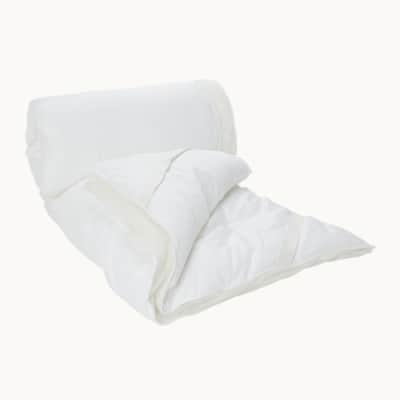
Some households remove a topper for part of the year; others keep it on the bed throughout the seasons. If you decide to store yours, make sure it is completely dry and clean according to its care instructions. Air it first, then place it in a breathable fabric cover or another storage option recommended by the maker. Avoid sealing wool in an airtight plastic bag for a long period, because trapped moisture can lead to stale odours and an unsuitable storage environment.
Store the topper in a cool, dry place away from direct sunlight, dampness, and strong household odours. Keep it off a basement floor and away from water pipes or exterior walls that may become cold or damp. Do not place heavy boxes on top, as prolonged compression can affect the loft and shape. If the topper is designed to be stored flat, keep it flat; if it may be rolled, follow the manufacturer’s directions and avoid tight, extended compression.
Before putting it back on the bed, inspect the cover and seams, check that the filling remains evenly distributed, and air it briefly. If you notice a persistent musty smell, visible staining, or signs of pests, do not simply cover the issue with fresh sheets. Seek advice on the appropriate cleaning or inspection steps.
A note on wool toppers and pads
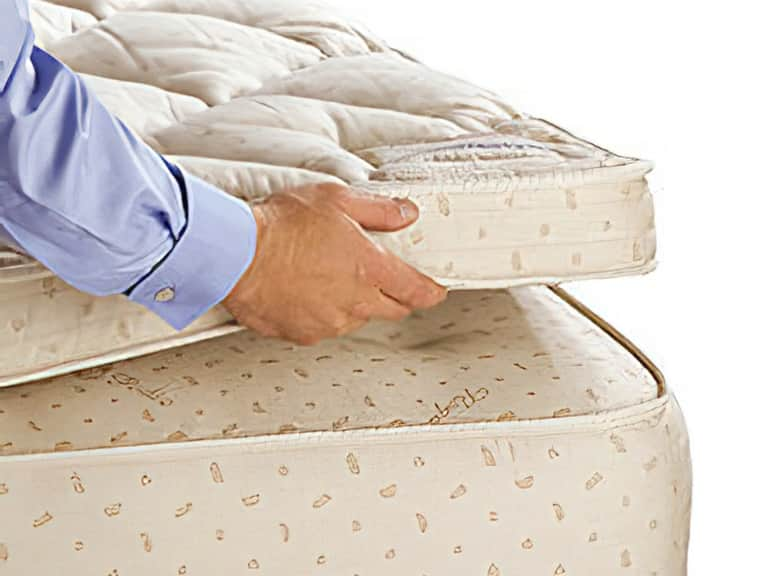
The words “topper” and “pad” can describe different constructions. A thick wool topper may add a more substantial layer of cushioning, while a wool-filled mattress pad may be thinner and intended mainly to provide a soft, breathable surface. Either way, care depends on the materials, quilting, and attachments used. Wool may be combined with cotton, latex, or other fibres, and the care requirements of the whole product can differ from those of wool alone.
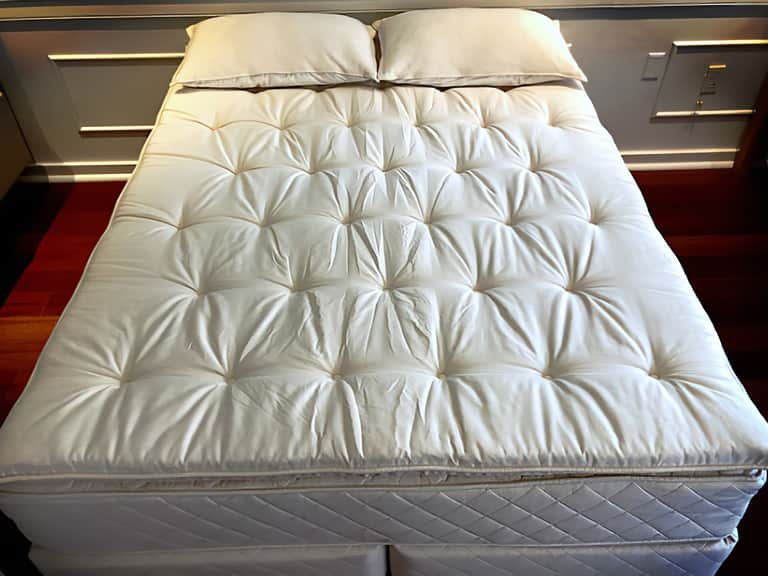
For example, a wool-filled mattress pad with a cotton cover may have care requirements that differ from a hand-tufted wool topper or a layered design containing latex. Do not infer that a removable-looking cover is machine washable, or that a natural material can tolerate every natural cleaning product. The label and manufacturer remain the most reliable sources for product-specific instructions.
A calm, repeatable care routine
The most effective routine is not elaborate. Once the bed is stripped, let the topper air briefly. Wash the sheets and protector according to their labels, then remake the bed only when every layer is dry. Address a spill with prompt blotting if spot cleaning is permitted. At seasonal changes, reassess ventilation, room humidity, and whether the topper will remain in use or be stored.
- Check the topper’s care label before cleaning, rotating, folding, or storing it.
- Air the bed regularly and let bedding cool and dry before making it.
- Use a properly fitted protector to reduce everyday soil and accidental moisture.
- Blot permitted spot-cleaning areas gently; avoid rubbing, soaking, and direct heat.
- Store the topper only when fully dry, in a clean, cool, dry, breathable setting.
Good wool topper care is ultimately an exercise in restraint. A well-made wool layer can be a quietly useful part of a comfortable bed, but it does not need constant intervention. Let it breathe, shield it from preventable spills, and follow the specific instructions for its construction. Across Canada’s long winters, humid summers, and changeable shoulder seasons, these modest habits can help preserve the feel of a wool sleep surface and make it easier to enjoy year after year.
Frequently asked questions
Can I machine-wash a wool mattress topper?
Only if the care label explicitly permits it. Many wool toppers are not designed for machine washing, and agitation, heat, or excess water may affect the wool, quilting, and shape. When instructions are unclear, contact the manufacturer before washing.
How often should I air a wool topper?
There is no single schedule for every home or product. Briefly airing the bed when changing sheets is a practical habit. A longer airing may be useful occasionally when the weather and care instructions allow, but avoid prolonged exposure to intense sun, damp air, or direct heat.
Can a wool topper be used in summer?
Many people use wool bedding throughout the year, but comfort is personal and depends on the full bedding arrangement and bedroom conditions. Adjust lighter layers, improve airflow, and keep the sleep surface dry. If warmth remains uncomfortable, consult the product information before changing how the topper is used.
What should I do if the topper smells musty?
Air it in a dry, well-ventilated space and check the room and mattress for sources of persistent moisture. Do not mask a lasting odour with fragrance or place the topper back on the bed while damp. If the smell remains, ask the manufacturer or a qualified textile-care professional about next steps.